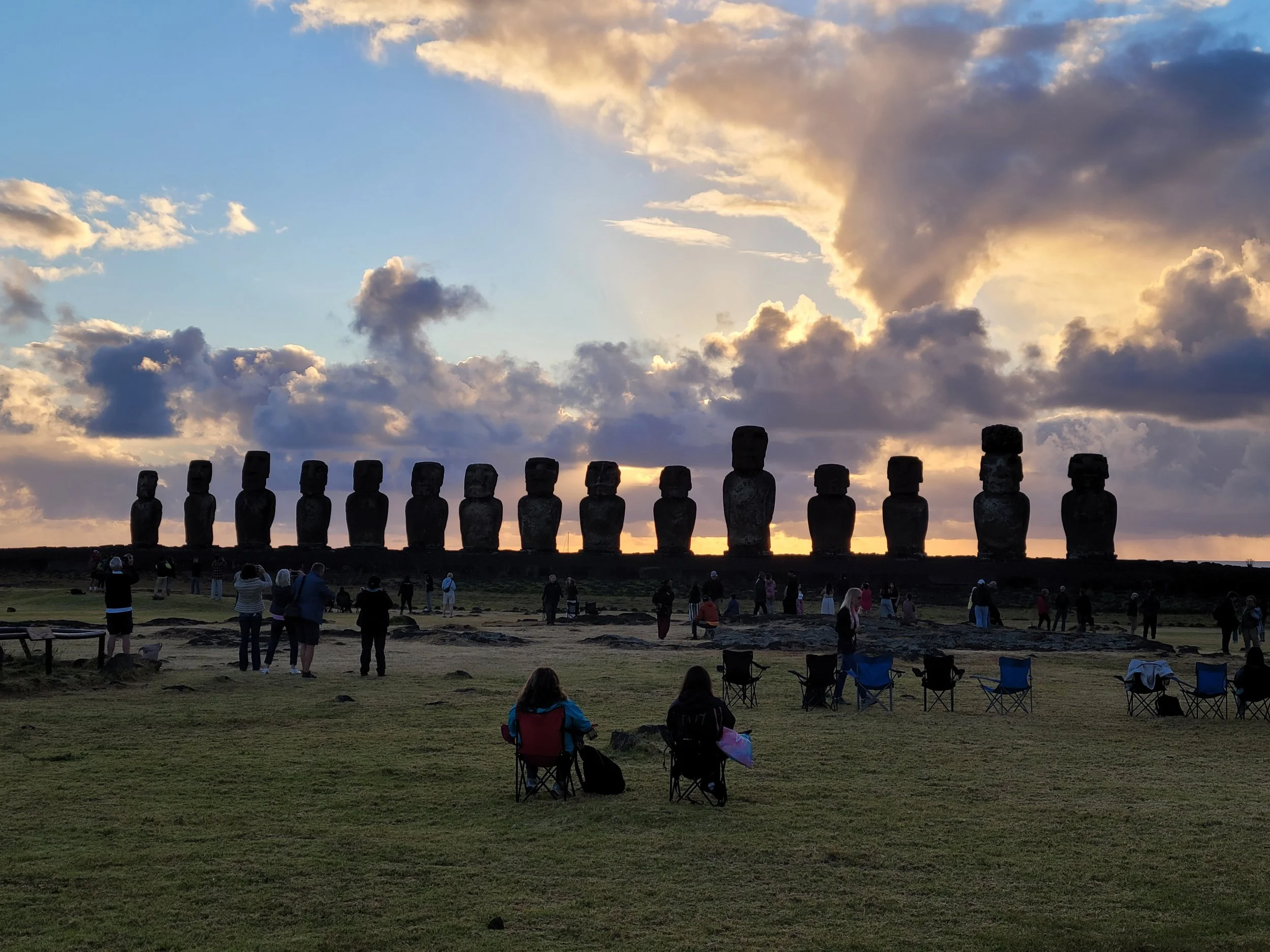
Ahu Tongariki
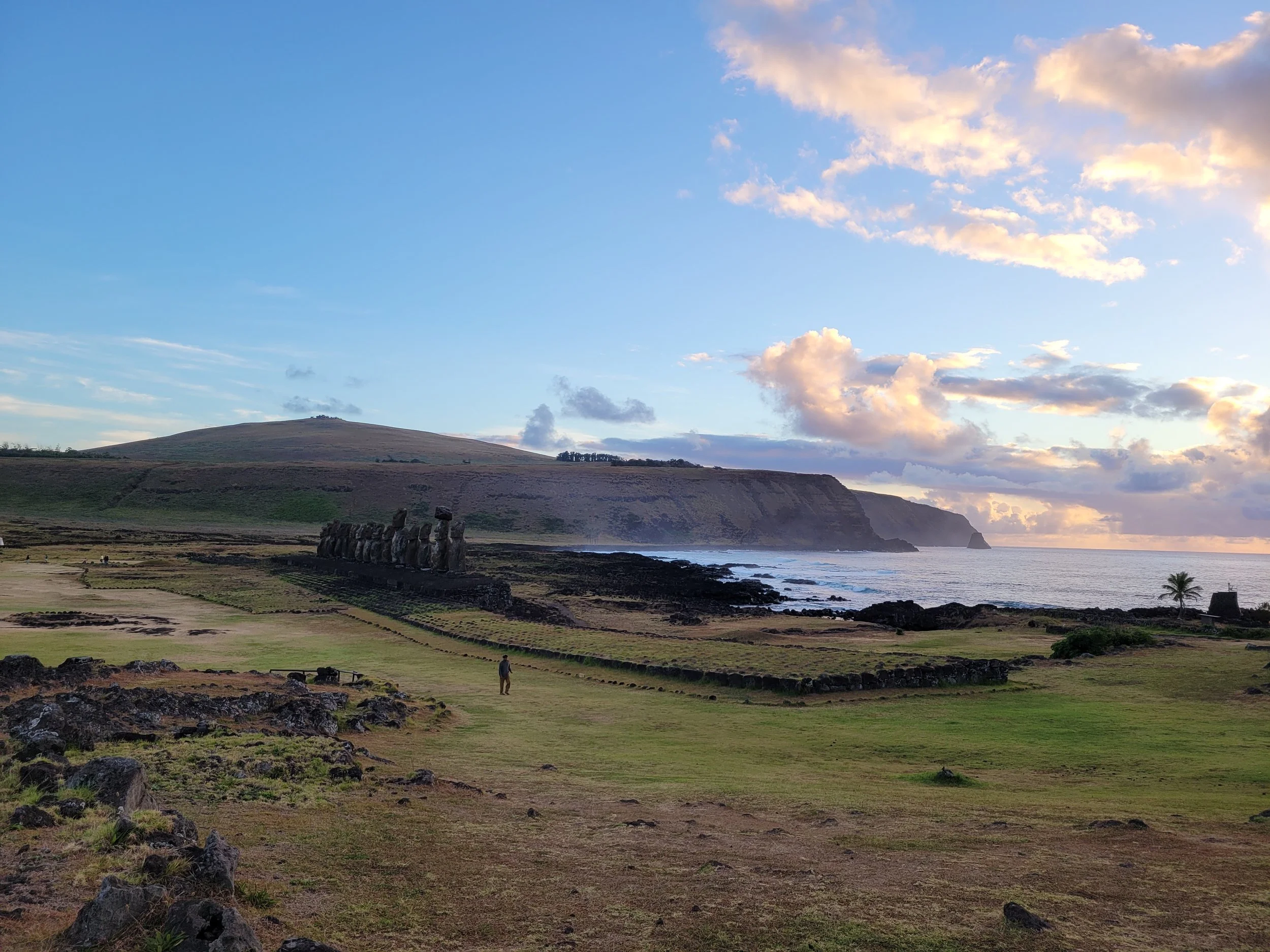
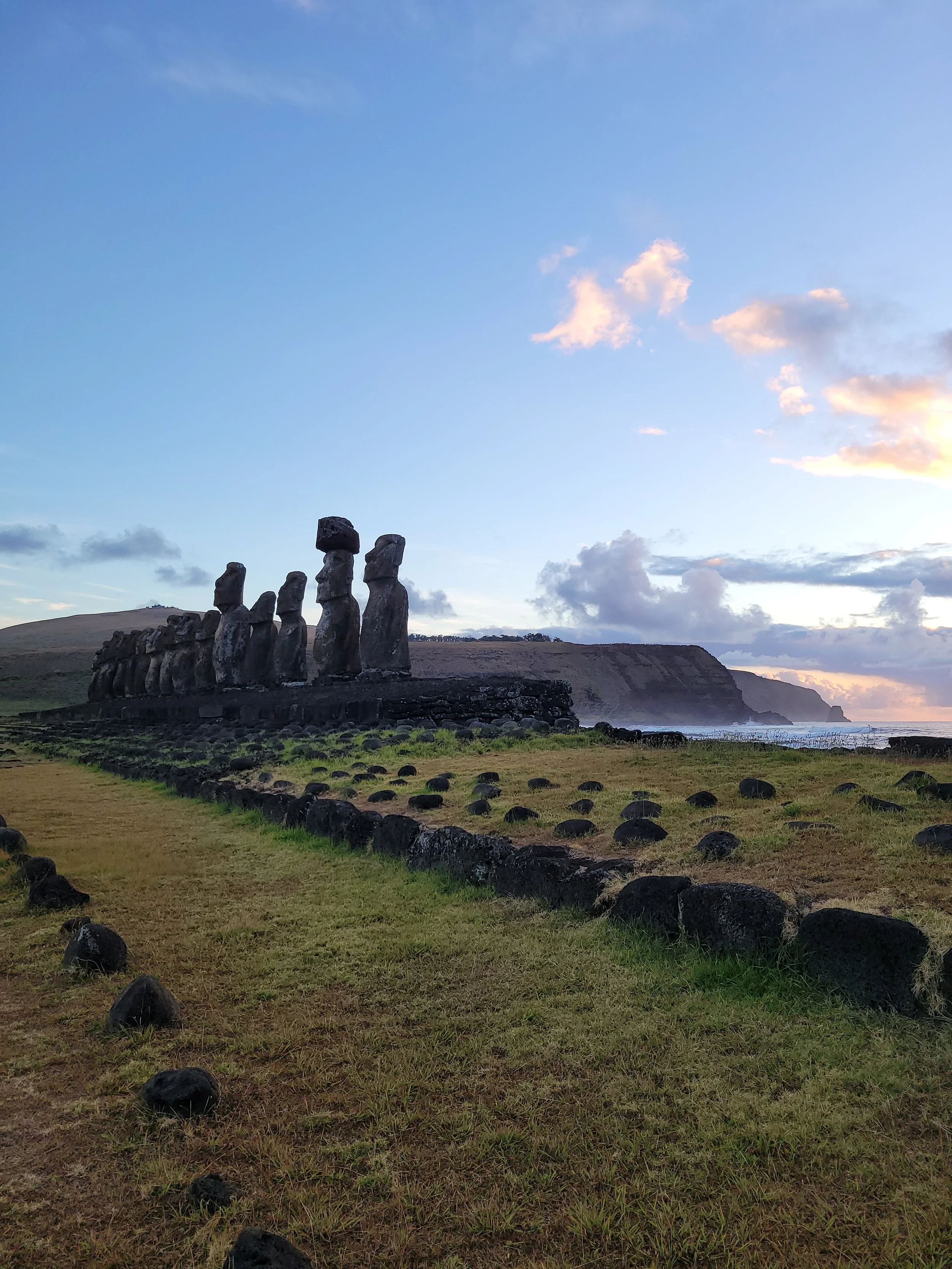
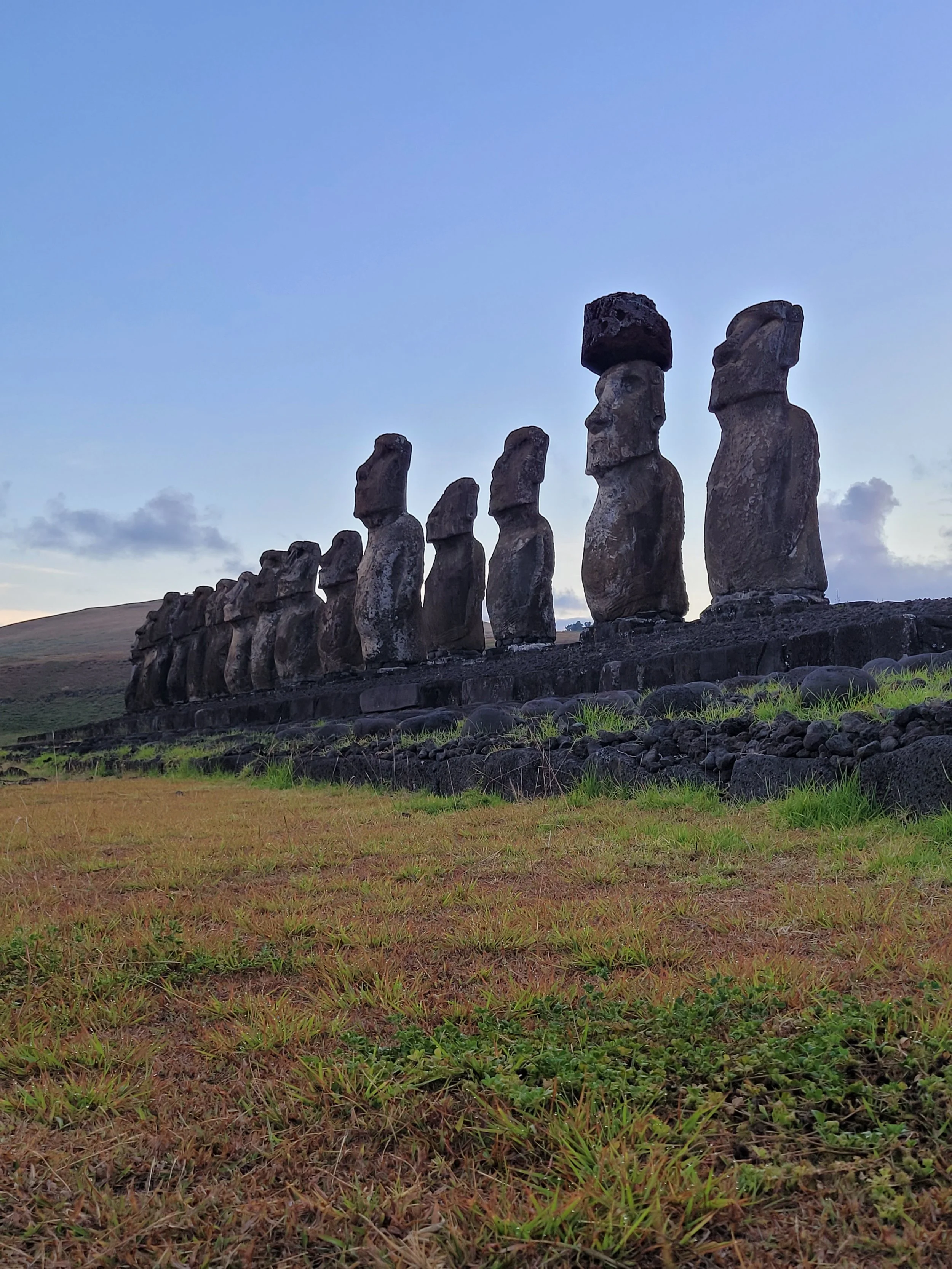
These Moai were toppled in the tsunami that hit the island in 1960, then restored to their current condition between 1992 and 1996.
BILL STAYS BEHIND on this last excursion, perhaps sensing it is something I have to do on my own. Queued up in front of the lodge’s Sprinter van are a handful of other guests, all who have become our friends over the past week. Good mornings are exchanged under the dark morning sky, and we board the van for the trip to Ahu Tongariki, arguably the most famous of the ceremonial platforms on Rapa Nui (known to many as Easter Island).
Everyone seems to sense this is meant to be a solitary journey, and we each take a seat that allows plenty of space between rows. I sip my coffee in silence, lost in my own thoughts, and peer out the mostly black window as we travel the now familiar coastal road. There: the turnoff to Ahu Hanga Te’e and its row of fallen Moai, their red topknots scattered like buckshot. Up ahead: Ahu Akahanga and more unrestored statues. On the left, I can make out only vague shadows of the famous quarry at Rano Raraku, where the Moai walked down from the volcano under their own power (their mana) to reach their intended corner of the island. If we were to keep to the road, we would start the loop back around the island and pass by Ahu Te Pito Kura (the Navel of the World or the Navel of Light), which some call the Center of the Universe. Instead, we pull into a graveled parking area and our driver says, We’re here.
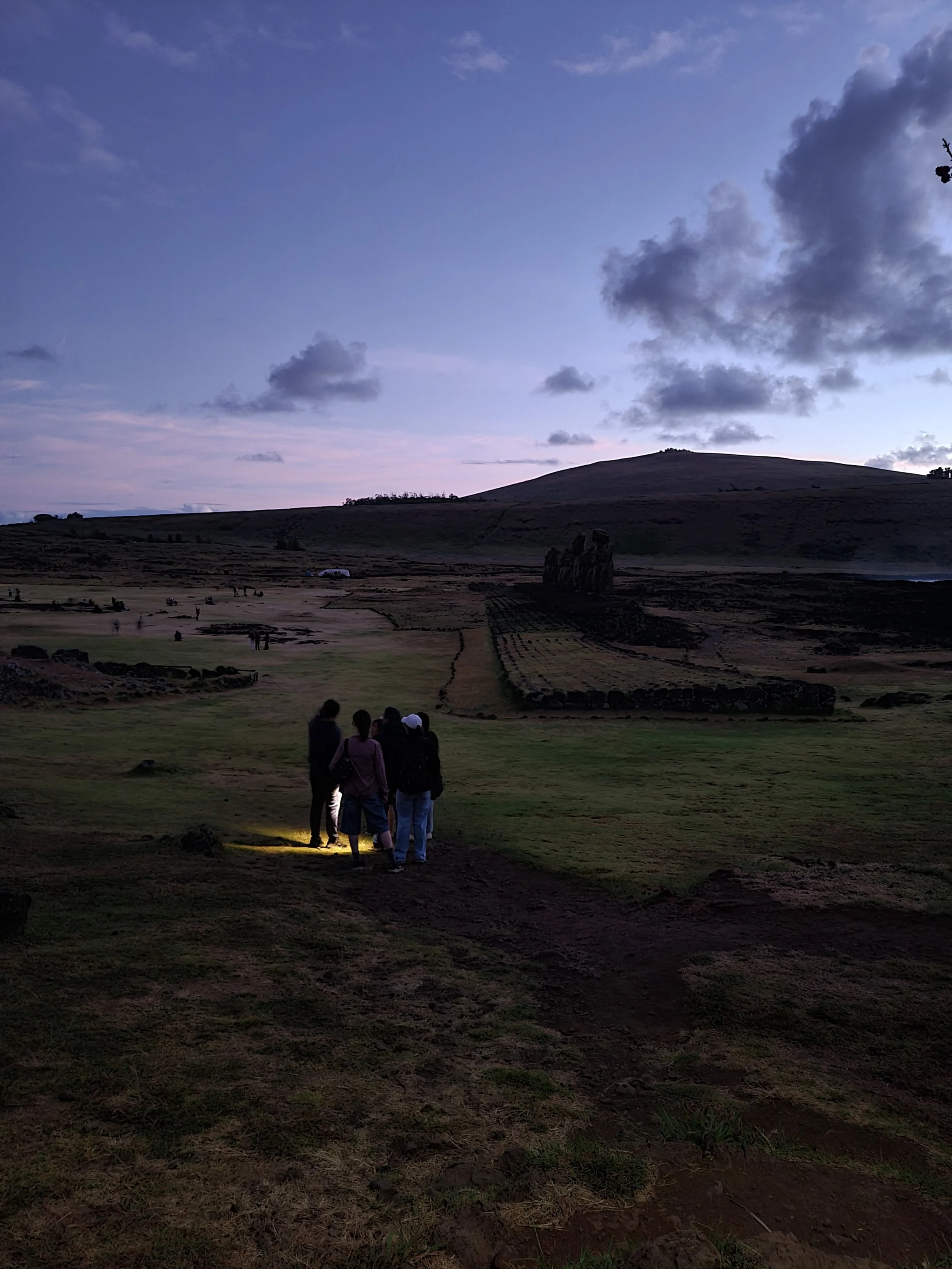
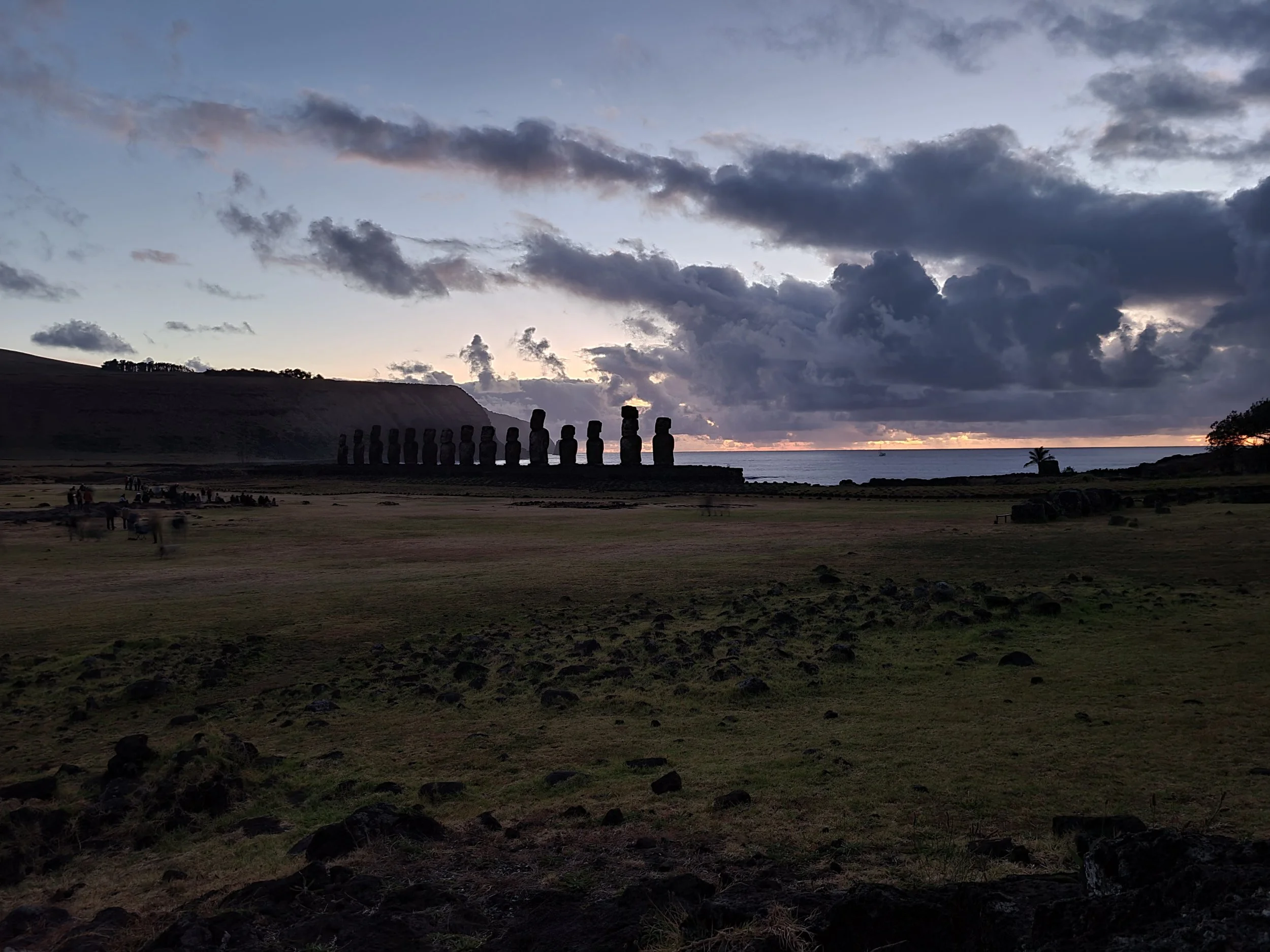
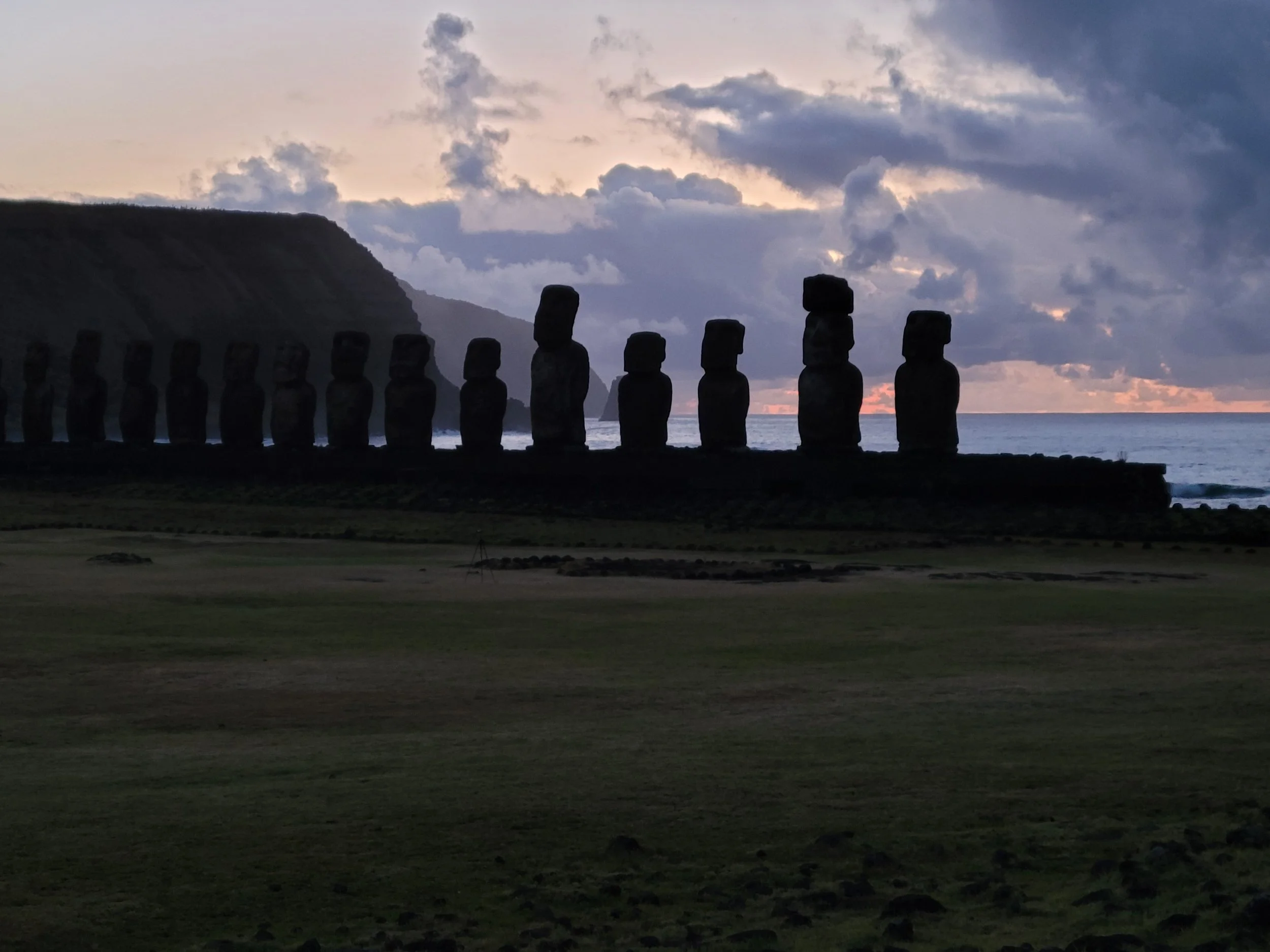
Many others have already arrived, with folding chairs or blankets spread out on the expanse of grassland (and historical gathering place) situated in front of Ahu Tongariki’s fifteen Moai. Yet despite the relative crowd, the only sounds I hear under our cover of darkness is the crash of ocean against rocky shores and the birdcalls that seem to be coaxing a reluctant sun.
My group disperses as soon as we pass through a dimly lit entry point, and suddenly I am on my own. I watch my step on a gentle slope that is pockmarked with basalt outcroppings, and I give my eyes time to adjust back to the pre-dawn light. I snap a few photos using the night setting on my phone, then search for the perfect place to experience the anticipated sunrise—ONLY I CAN’T GET OUT OF MY HEAD! My thoughts are on a gravely ill family member, and for weeks now a near-hysterical panic has taken up residence in my chest. The prospect of losing them has made it impossible to focus on anything else, and I make myself do what I’ve done all week, force myself back into the present, back into the here and now. I take a deep breath, exhale slowly, and listen to the birds, the low murmur of human voices, and the beating of my own heart.
Then, behind the Moai and the ocean that separates them from the rest of the world, is a hint of pink, then amber, appearing like a surprise on the horizon. The ghost of a sailboat materializes in the distance, and the clouds in the eastern sky provide the drama befitting this occasion. The air turns electric, the atmosphere, palpable. Before me stand the ancestors of the Rapa Nui people, and although I cannot claim them as mine, I feel as though I have always been here. Tears trace down my checks in an inexplicable feeling of being connected to the air, the ground, the sky, the ocean’s tides, and I breathe in again, feeling that panic release from my body. In this place, in this moment in time, I am whole, I am strong. I am.
A few days after I get home, I travel to the place where I grew up and together with the rest of my family, a host of amazing doctors, and an incredible gift from the universe, we save a life.
To comment on this post, click here for my Contact page.
Author’s note: to see video clips of this sunrise at Ahu Tongariki, please visit me on Facebook or Instagram. Links are listed above.
All photos in this post were taken by me on a trip to Rapa Nui in November 2025. These images cannot be copied, reproduced, or used without written permission from me.
